While its recent attack on a 14-year-old girl in Pakistan brought international outrage, the Pakistani Taliban take credit for a long list of assaults on civilians and the military in the country's mostly ungoverned tribal area along the Afghan border.
The banned Islamist group, which has intimate links to the Afghan Taliban and al Qaeda, unabashedly confirmed it tried to kill teen activist Malala Yousufzai as she rode home from school in a van October 9.
But before that, the group, formally known as Tehrik-i-Taliban Pakistan (TTP), took the global spotlight when Faisal Shahzad, a Pakistani-American, attempted to detonate a car bomb in New York's Times Square in May 2010. The TTP took responsibility, and Shahzad testified that he had received training from them.
The following September, the U.S. State Department designated the TTP a Foreign Terrorist Organization.
Are they "the Taliban?"
They are not "the Taliban" that the U.S. forces have been at war with in Afghanistan, according to a Pakistani analyst. But that they adopted the name "Taliban" is no coincidence.
Formally known as Tehrik-i-Taliban Pakistan, the group is very closely linked with its namesake in Afghanistan as well as with al Qaeda. It shares its religious extremist ideology -- but is its own distinct group.
Saturday, October 20, 2012
Suspended Leicestershire police officer killed by train
Gordon Fraser had been suspended from duty since December 2010
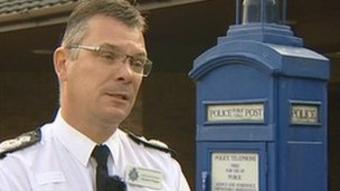
A senior Leicestershire police officer who had recently been suspended from the force has been struck and killed by a train.
Police said Assistant Chief Constable Gordon Fraser died on Friday. His death is not being treated as suspicious.
Mr Fraser, 49, and his wife Teresa appeared in court in July charged with perverting the course of justice over a speeding incident in Scotland.
Mr Fraser and his wife were due to appear in court on Monday.
Leicestershire Police said Mr Fraser was struck on the railway line at Aston Magna, Moreton-in-the-Marsh.
It is understood the couple claimed she was the driver of a speeding car in Scotland in September 2011, when it was alleged her husband was actually at the wheel.
Speaking after the charges were brought, chief Crown prosecutor for Thames and Chiltern Crown Prosecution Service, Baljit Ubhey, said: "The essence of the charge is that Mr Fraser, having allegedly committed a speeding offence, falsely informed the investigating authorities that Mrs Fraser had been the driver of the vehicle in question, and she falsely accepted responsibility for the speeding offence."
A senior Leicestershire police officer who had recently been suspended from the force has been struck and killed by a train.
Police said Assistant Chief Constable Gordon Fraser died on Friday. His death is not being treated as suspicious.
Mr Fraser, 49, and his wife Teresa appeared in court in July charged with perverting the course of justice over a speeding incident in Scotland.
Mr Fraser and his wife were due to appear in court on Monday.
Leicestershire Police said Mr Fraser was struck on the railway line at Aston Magna, Moreton-in-the-Marsh.
It is understood the couple claimed she was the driver of a speeding car in Scotland in September 2011, when it was alleged her husband was actually at the wheel.
Speaking after the charges were brought, chief Crown prosecutor for Thames and Chiltern Crown Prosecution Service, Baljit Ubhey, said: "The essence of the charge is that Mr Fraser, having allegedly committed a speeding offence, falsely informed the investigating authorities that Mrs Fraser had been the driver of the vehicle in question, and she falsely accepted responsibility for the speeding offence."
Friday, October 19, 2012
A Bit About Rape
Rape, sometimes also called sexual assault, can happen to both men and women of any age.
I define rape as: "The penetration, no matter how slight, of the vagina or anus with any body part or object, or oral penetration by a sex organ of another person, without the consent of the victim."
Rape is forced and unwanted. It's about power, not sex. A rapist uses actual force or violence — or the threat of it — to take control over another human being. Some rapists use drugs to take away a person's ability to fight back. Rape is a crime, whether the person committing it is a stranger, a date, an acquaintance, or a family member.
No matter how it happened, rape is frightening and traumatizing. People who have been raped need care, comfort, and a way to heal.
There are three things that everyone who has been raped should do, though:
Know that the rape wasn't your fault.
Seek medical care.
Deal with your feelings.
It's Not Your Fault
Whatever happened, it wasn't your fault. No one has the right to have sex with you against your will. The blame for a rape lies solely with the rapist.
Sometimes a rapist will try to exert even more power by making the person who's been raped feel like it was actually his or her fault. A rapist may say stuff like, "You asked for it" or "You wanted it." This is just another way for the rapist to take control. The truth is that what a person wears, what a person says, or how a person acts is never a justification for rape.
Most people who are raped know their rapists. That can sometimes lead the person who's been raped to try to protect the perpetrator. Make protecting yourself your priority. Don't worry about protecting the person who raped you.
If you want to report the crime to the police, do so. Reporting a rape may help protect others from that person — and may help you feel a little less like you were a victim.
But making a report to the police may be difficult for some people. If you don't feel comfortable reporting it, you don't have to. You may prefer to get advice about what to do from an experienced adult who can be sympathetic to you. Do whatever helps you to feel safe and heal without blaming yourself.
Seek Medical Care
The first thing someone who has been raped needs to do is see a medical doctor. Most medical centers and hospital emergency departments have doctors and counselors who have been trained to take care of someone who has been raped. It's important to get medical care because a doctor will need to check you for sexually transmitted diseases (STDs) and internal injuries.
Most areas have local rape hotlines that can give you advice about where to go for medical help. You may want to have a friend or family member go along for support, especially if you're feeling upset and unsafe. Some rape crisis centers also provide advocates who can go along with you.
If you are under 18 and don't want your parents to know about the rape, ask the rape crisis center about the laws in your area. Many jurisdictions treat rape exams confidentially, but some will require that a parent or guardian be notified.
You should get medical attention right away without changing your clothes, showering, douching, or washing. It can be hard not to clean up, of course — it's a natural human instinct to wash away all traces of a sexual assault. But being examined right away is the best way to ensure you get proper medical treatment.
Immediate medical attention also helps when people decide to report the crime, providing evidence needed to prosecute the rapist if a criminal case is pursued. If you've been raped and think you don't want to report it, you could change your mind later — this often happens — and having the results of a medical exam can help you do this. (There are laws, known as statutes of limitations, that give a person only a certain amount of time to pursue legal action for a crime, though, so be sure you know how long you have to report the rape. A local rape crisis center can advise you of the laws in your area.)
Even if you don't get examined right away, it doesn't mean you can't get a checkup later. It's always best to see a doctor immediately after a rape, of course. But a person can still go to a doctor or local clinic to get checked out for STDs, pregnancy, or injuries any time after being raped. In some cases, doctors can even gather evidence several days after a rape has occurred.
Rape isn't just physically damaging, it can be emotionally traumatic as well. The right emotional attention, care, and support can help a person begin the healing process and prevent lingering problems later on.
Someone who has been raped might feel a lot of things: angry, degraded, frightened, numb, or confused. It's also normal for someone who has been raped to feel ashamed or embarrassed. Some people withdraw from friends and family. Others don't want to be alone. Some feel depressed, anxious, or nervous.
Sometimes the feelings surrounding rape may show up in physical ways, such as trouble sleeping or eating. It may be hard to concentrate in school or to participate in everyday activities. Sometimes it may feel like you'll never get over the trauma of the rape. Experts often refer to these emotions — and their physical side effects — as rape trauma syndrome. The best way to work through them is with professional help.
It can be hard to think or talk about a frightening experience, especially something as personal as rape. People who have been raped sometimes avoid seeking help because they're afraid that talking about it will bring back memories or feelings that are too painful. But this can actually do more harm than good.
Talking about rape in a safe environment with the help and support of a trained professional is the best way to ensure long-term healing. Working through the pain sooner rather than later can help reduce symptoms like nightmares and flashbacks. It can also help people avoid potentially harmful behaviors and emotions, like major depression or self-injury.
I define rape as: "The penetration, no matter how slight, of the vagina or anus with any body part or object, or oral penetration by a sex organ of another person, without the consent of the victim."
Rape is forced and unwanted. It's about power, not sex. A rapist uses actual force or violence — or the threat of it — to take control over another human being. Some rapists use drugs to take away a person's ability to fight back. Rape is a crime, whether the person committing it is a stranger, a date, an acquaintance, or a family member.
No matter how it happened, rape is frightening and traumatizing. People who have been raped need care, comfort, and a way to heal.
There are three things that everyone who has been raped should do, though:
Know that the rape wasn't your fault.
Seek medical care.
Deal with your feelings.
It's Not Your Fault
Whatever happened, it wasn't your fault. No one has the right to have sex with you against your will. The blame for a rape lies solely with the rapist.
Sometimes a rapist will try to exert even more power by making the person who's been raped feel like it was actually his or her fault. A rapist may say stuff like, "You asked for it" or "You wanted it." This is just another way for the rapist to take control. The truth is that what a person wears, what a person says, or how a person acts is never a justification for rape.
Most people who are raped know their rapists. That can sometimes lead the person who's been raped to try to protect the perpetrator. Make protecting yourself your priority. Don't worry about protecting the person who raped you.
If you want to report the crime to the police, do so. Reporting a rape may help protect others from that person — and may help you feel a little less like you were a victim.
But making a report to the police may be difficult for some people. If you don't feel comfortable reporting it, you don't have to. You may prefer to get advice about what to do from an experienced adult who can be sympathetic to you. Do whatever helps you to feel safe and heal without blaming yourself.
Seek Medical Care
The first thing someone who has been raped needs to do is see a medical doctor. Most medical centers and hospital emergency departments have doctors and counselors who have been trained to take care of someone who has been raped. It's important to get medical care because a doctor will need to check you for sexually transmitted diseases (STDs) and internal injuries.
Most areas have local rape hotlines that can give you advice about where to go for medical help. You may want to have a friend or family member go along for support, especially if you're feeling upset and unsafe. Some rape crisis centers also provide advocates who can go along with you.
If you are under 18 and don't want your parents to know about the rape, ask the rape crisis center about the laws in your area. Many jurisdictions treat rape exams confidentially, but some will require that a parent or guardian be notified.
You should get medical attention right away without changing your clothes, showering, douching, or washing. It can be hard not to clean up, of course — it's a natural human instinct to wash away all traces of a sexual assault. But being examined right away is the best way to ensure you get proper medical treatment.
Immediate medical attention also helps when people decide to report the crime, providing evidence needed to prosecute the rapist if a criminal case is pursued. If you've been raped and think you don't want to report it, you could change your mind later — this often happens — and having the results of a medical exam can help you do this. (There are laws, known as statutes of limitations, that give a person only a certain amount of time to pursue legal action for a crime, though, so be sure you know how long you have to report the rape. A local rape crisis center can advise you of the laws in your area.)
Even if you don't get examined right away, it doesn't mean you can't get a checkup later. It's always best to see a doctor immediately after a rape, of course. But a person can still go to a doctor or local clinic to get checked out for STDs, pregnancy, or injuries any time after being raped. In some cases, doctors can even gather evidence several days after a rape has occurred.
Rape isn't just physically damaging, it can be emotionally traumatic as well. The right emotional attention, care, and support can help a person begin the healing process and prevent lingering problems later on.
Someone who has been raped might feel a lot of things: angry, degraded, frightened, numb, or confused. It's also normal for someone who has been raped to feel ashamed or embarrassed. Some people withdraw from friends and family. Others don't want to be alone. Some feel depressed, anxious, or nervous.
Sometimes the feelings surrounding rape may show up in physical ways, such as trouble sleeping or eating. It may be hard to concentrate in school or to participate in everyday activities. Sometimes it may feel like you'll never get over the trauma of the rape. Experts often refer to these emotions — and their physical side effects — as rape trauma syndrome. The best way to work through them is with professional help.
It can be hard to think or talk about a frightening experience, especially something as personal as rape. People who have been raped sometimes avoid seeking help because they're afraid that talking about it will bring back memories or feelings that are too painful. But this can actually do more harm than good.
Talking about rape in a safe environment with the help and support of a trained professional is the best way to ensure long-term healing. Working through the pain sooner rather than later can help reduce symptoms like nightmares and flashbacks. It can also help people avoid potentially harmful behaviors and emotions, like major depression or self-injury.
Drake graduates from high school
We so hope Drake is somewhere recreating the music video for “HYFR,” because this is a reason to celebrate!
The 25-year-old rapper/actor, who (in addition to his music) is famous for portraying Jimmy Brooks on “Degrassi: The Next Generation,” is now a high school graduate in real life.
And he did it with high scores, to boot: “97 percent on my final exam. 88 percent in the course. One of the greatest feelings in my entire life,” Drake posted Wednesday. “As of tonight I have graduated high school!”
He added in a sweet show of gratitude, “Thank you to my teacher Kim Janzen for spending the last 5 months working tirelessly with me!! OVO SOUND.”
The 25-year-old rapper/actor, who (in addition to his music) is famous for portraying Jimmy Brooks on “Degrassi: The Next Generation,” is now a high school graduate in real life.
And he did it with high scores, to boot: “97 percent on my final exam. 88 percent in the course. One of the greatest feelings in my entire life,” Drake posted Wednesday. “As of tonight I have graduated high school!”
He added in a sweet show of gratitude, “Thank you to my teacher Kim Janzen for spending the last 5 months working tirelessly with me!! OVO SOUND.”
Afghan woman beheads daughter-in-law for refusing prostitution, police say
A young woman had her head chopped off for refusing to prostitute herself — and one of the killers was her mother-in-law, police say.
The other was the mother-in-law’s cousin. And both admit it, according to Afghan police.
To most people, the slaying of 20-year-old Mah Gul is unimaginable.
But it’s just “one more incident that highlights the violent atmosphere that women and girls face in Afghanistan and the region,” Suzanne Nossel, executive director of Amnesty International USA, said Thursday.
The killing happened Sunday in Herat province, in southwest Afghanistan along the Iranian border.
Gul’s husband is a baker. When he left home for work, his mother and her cousin tried to force the young wife into prostitution, said Noorthan Mikvad, spokesman for Herat police.
When she wouldn’t do it, they beheaded her, he said.
In a statement, Nossel said women and girls in the region “are raped, killed, forced into marriage in childhood, prevented from obtaining an education and denied their sexual and reproductive rights. Until basic human rights are guaranteed … these horrible abuses will continue to be committed.”
The U.S. State Department says some “Afghan women and girls are subjected to forced prostitution, forced marriages – including through forced marriages in which husbands force their wives into prostitution, and where they are given by their families to settle debts or disputes.”
Some families even knowingly sell their children into forced prostitution, the State Department said, “including for bacha baazi – where wealthy men use groups of young boys for social and sexual entertainment.”
Herat police say their investigation found that Gul’s husband and father-in-law were not involved in her killing.
The other was the mother-in-law’s cousin. And both admit it, according to Afghan police.
To most people, the slaying of 20-year-old Mah Gul is unimaginable.
But it’s just “one more incident that highlights the violent atmosphere that women and girls face in Afghanistan and the region,” Suzanne Nossel, executive director of Amnesty International USA, said Thursday.
The killing happened Sunday in Herat province, in southwest Afghanistan along the Iranian border.
Gul’s husband is a baker. When he left home for work, his mother and her cousin tried to force the young wife into prostitution, said Noorthan Mikvad, spokesman for Herat police.
When she wouldn’t do it, they beheaded her, he said.
In a statement, Nossel said women and girls in the region “are raped, killed, forced into marriage in childhood, prevented from obtaining an education and denied their sexual and reproductive rights. Until basic human rights are guaranteed … these horrible abuses will continue to be committed.”
The U.S. State Department says some “Afghan women and girls are subjected to forced prostitution, forced marriages – including through forced marriages in which husbands force their wives into prostitution, and where they are given by their families to settle debts or disputes.”
Some families even knowingly sell their children into forced prostitution, the State Department said, “including for bacha baazi – where wealthy men use groups of young boys for social and sexual entertainment.”
Herat police say their investigation found that Gul’s husband and father-in-law were not involved in her killing.
Thursday, October 18, 2012
Megan Fox, Brian Austin Green welcome baby boy
Adele is probably somewhere taking notes on Megan Fox’s stealthy delivery.
Not only did the actress stay under the radar during her pregnancy (as Adele too has masterfully done), but she also quietly welcomed her first child with husband Brian Austin Green last month.
“We have been very lucky to have had a peaceful few weeks at home, but I would like to release this myself before others do,” Fox said on her Facebook page Wednesday. “I gave birth to our son Noah Shannon Green on September 27. He is healthy, happy, and perfect.”
Fox, 26, and Green, 39, married in 2010. Rather than talk about their impending bundle of joy, the couple let a photo speak for them when a snapshot of Fox’s growing belly surfaced in June.
Fox, who’s already stepmom to Green’s 10-year-old son, said in her post that she and Green “are humbled to have the opportunity to call ourselves the parents of this beautiful soul and I am forever grateful to God for allowing me to know this kind of boundless, immaculate love. Thanks to those of you who wish to send your positive energy and well wishes. May God bless you and your families abundantly.
Not only did the actress stay under the radar during her pregnancy (as Adele too has masterfully done), but she also quietly welcomed her first child with husband Brian Austin Green last month.
“We have been very lucky to have had a peaceful few weeks at home, but I would like to release this myself before others do,” Fox said on her Facebook page Wednesday. “I gave birth to our son Noah Shannon Green on September 27. He is healthy, happy, and perfect.”
Fox, 26, and Green, 39, married in 2010. Rather than talk about their impending bundle of joy, the couple let a photo speak for them when a snapshot of Fox’s growing belly surfaced in June.
Fox, who’s already stepmom to Green’s 10-year-old son, said in her post that she and Green “are humbled to have the opportunity to call ourselves the parents of this beautiful soul and I am forever grateful to God for allowing me to know this kind of boundless, immaculate love. Thanks to those of you who wish to send your positive energy and well wishes. May God bless you and your families abundantly.
Conjoined twins Rosie and Ruby Formosa separated
The mother of conjoined twins has described her joy after a successful operation to separate them.
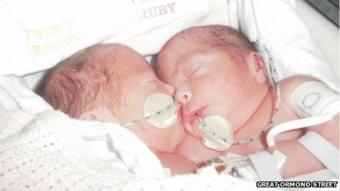
Rosie and Ruby Formosa were born joined at the abdomen and sharing part of the intestine.
The twins, now 12 weeks old, were operated on at London's Great Ormond Street Hospital the day after they were born on 27 July.
Their mother Angela, from Bexleyheath in south-east London, said the "smiling bubbly babies" were doing well.
The twins needed an emergency operation to separate them.
Mrs Formosa, 32, said finding out the twins were joined had been a shock after her "textbook" pregnancy with first daughter Lily, now aged five.
The twins are now putting on weight and starting to smile, their mother said
"At an early pregnancy scan they said the twins looked very close together so I went to King's College for another scan," she said.
"Between 16 and 20 weeks we found out that they were joined - I didn't know what to think, I was shocked and I felt sad.
"We didn't know what to expect until they were born - the doctors could not tell where they were connected.
"They decided to deliver them early at 34 weeks."
Rosie and Ruby Formosa were born joined at the abdomen and sharing part of the intestine.
The twins, now 12 weeks old, were operated on at London's Great Ormond Street Hospital the day after they were born on 27 July.
Their mother Angela, from Bexleyheath in south-east London, said the "smiling bubbly babies" were doing well.
The twins needed an emergency operation to separate them.
Mrs Formosa, 32, said finding out the twins were joined had been a shock after her "textbook" pregnancy with first daughter Lily, now aged five.
The twins are now putting on weight and starting to smile, their mother said
"At an early pregnancy scan they said the twins looked very close together so I went to King's College for another scan," she said.
"Between 16 and 20 weeks we found out that they were joined - I didn't know what to think, I was shocked and I felt sad.
"We didn't know what to expect until they were born - the doctors could not tell where they were connected.
"They decided to deliver them early at 34 weeks."
Human trafficking to UK 'rising'
The number of people being trafficked into the UK is rising, with gangs in China, Nigeria and eastern Europe targeting the country, a government report says.
Many victims of trafficking are used for sexual exploitation or forced labour
The number of people being trafficked into the UK is rising, latest government estimates suggest.
Last year the authorities learned of 946 victims, compared with 710 in 2010, the inter-departmental ministerial group on human trafficking said.
Crime gangs in China, Vietnam, Nigeria and eastern Europe now pose the biggest threat to the UK on the issue, it said.
The government said better co-ordination between its departments and with authorities abroad was key.
There is currently no official figure for the number of victims trafficked into the country each year.
However, the group's report said that last year 712 adult victims and 234 child victims were reported to the National Referral Mechanism, the official body that identifies and looks after those caught up in trafficking.
Of the victims referred in 2010, 524 were adults and 186 were children.
It is thought the increase could be explained by improvements in identifying victims, although campaigners say the figures of those being trafficked could be far higher as many victims choose not to come forward for fear of being sent back to where they came from.
The report detailed two cases of people being trafficked for illegal organ donations but they were detected and stopped before the donations were carried out. One involved the planned sale of a victim's kidneys.
The report also said there had been an increase in the number of children being forced into crime, including street begging. The Child Exploitation and Online Protection Centre estimates there are about 300 child trafficking victims in the UK every year.
Many victims of trafficking are used for sexual exploitation or forced labour
The number of people being trafficked into the UK is rising, latest government estimates suggest.
Last year the authorities learned of 946 victims, compared with 710 in 2010, the inter-departmental ministerial group on human trafficking said.
Crime gangs in China, Vietnam, Nigeria and eastern Europe now pose the biggest threat to the UK on the issue, it said.
The government said better co-ordination between its departments and with authorities abroad was key.
There is currently no official figure for the number of victims trafficked into the country each year.
However, the group's report said that last year 712 adult victims and 234 child victims were reported to the National Referral Mechanism, the official body that identifies and looks after those caught up in trafficking.
Of the victims referred in 2010, 524 were adults and 186 were children.
It is thought the increase could be explained by improvements in identifying victims, although campaigners say the figures of those being trafficked could be far higher as many victims choose not to come forward for fear of being sent back to where they came from.
The report detailed two cases of people being trafficked for illegal organ donations but they were detected and stopped before the donations were carried out. One involved the planned sale of a victim's kidneys.
The report also said there had been an increase in the number of children being forced into crime, including street begging. The Child Exploitation and Online Protection Centre estimates there are about 300 child trafficking victims in the UK every year.
Human trafficking to UK 'rising'
The number of people being trafficked into the UK is rising, with gangs in China, Nigeria and eastern Europe targeting the country, a government report says.
Many victims of trafficking are used for sexual exploitation or forced labour
The number of people being trafficked into the UK is rising, latest government estimates suggest.
Last year the authorities learned of 946 victims, compared with 710 in 2010, the inter-departmental ministerial group on human trafficking said.
Crime gangs in China, Vietnam, Nigeria and eastern Europe now pose the biggest threat to the UK on the issue, it said.
The government said better co-ordination between its departments and with authorities abroad was key.
There is currently no official figure for the number of victims trafficked into the country each year.
However, the group's report said that last year 712 adult victims and 234 child victims were reported to the National Referral Mechanism, the official body that identifies and looks after those caught up in trafficking.
Of the victims referred in 2010, 524 were adults and 186 were children.
It is thought the increase could be explained by improvements in identifying victims, although campaigners say the figures of those being trafficked could be far higher as many victims choose not to come forward for fear of being sent back to where they came from.
The report detailed two cases of people being trafficked for illegal organ donations but they were detected and stopped before the donations were carried out. One involved the planned sale of a victim's kidneys.
The report also said there had been an increase in the number of children being forced into crime, including street begging. The Child Exploitation and Online Protection Centre estimates there are about 300 child trafficking victims in the UK every year.
Many victims of trafficking are used for sexual exploitation or forced labour
The number of people being trafficked into the UK is rising, latest government estimates suggest.
Last year the authorities learned of 946 victims, compared with 710 in 2010, the inter-departmental ministerial group on human trafficking said.
Crime gangs in China, Vietnam, Nigeria and eastern Europe now pose the biggest threat to the UK on the issue, it said.
The government said better co-ordination between its departments and with authorities abroad was key.
There is currently no official figure for the number of victims trafficked into the country each year.
However, the group's report said that last year 712 adult victims and 234 child victims were reported to the National Referral Mechanism, the official body that identifies and looks after those caught up in trafficking.
Of the victims referred in 2010, 524 were adults and 186 were children.
It is thought the increase could be explained by improvements in identifying victims, although campaigners say the figures of those being trafficked could be far higher as many victims choose not to come forward for fear of being sent back to where they came from.
The report detailed two cases of people being trafficked for illegal organ donations but they were detected and stopped before the donations were carried out. One involved the planned sale of a victim's kidneys.
The report also said there had been an increase in the number of children being forced into crime, including street begging. The Child Exploitation and Online Protection Centre estimates there are about 300 child trafficking victims in the UK every year.
Subscribe to:
Posts (Atom)